Insight
In and Out of the Box
Imagine these two scenarios for your Saturday night plans:
Scenario A In scenario A, you're invited to a night out for dinner and drinks with an old friend. | Scenario B In scenario B, you're invited to visit a distant relative with whom you have little in common. |
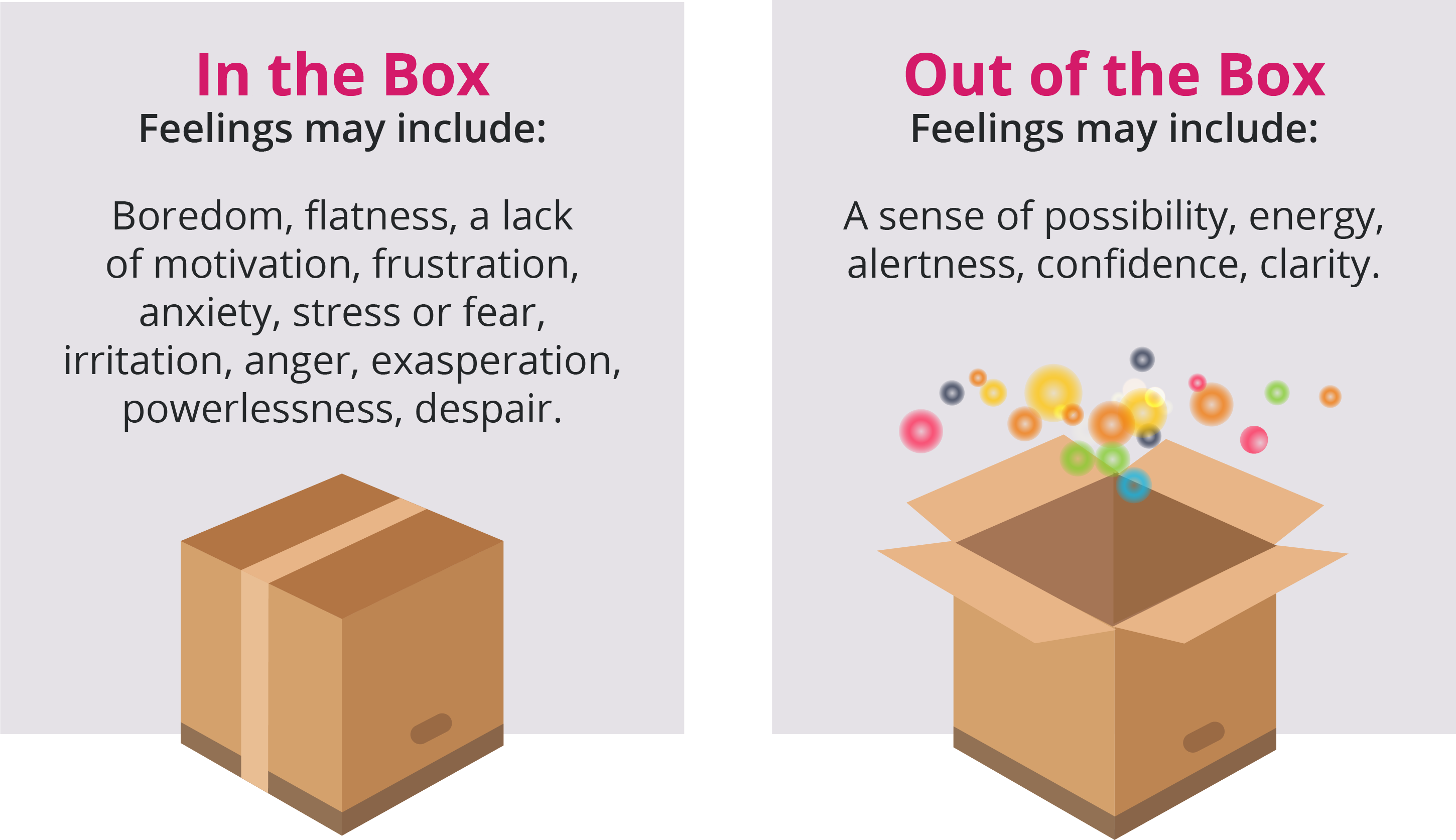
What was your reaction as you read scenario A? Were your feelings positive? Maybe you felt excitement or happiness as you imagined the fun you might have with your friend? If so, this is what we consider the state of being out of the box: you feel creative, alive, open, or full of energy.
What about scenario B? Presumably less positive? Maybe you felt resentment, frustration or even just neutral with the thought of having to spend valuable time visiting a relative. This is what we consider an in the box state: you do not feel alive or open, and instead feel irritated or unmotivated.
How do I know if I’m in the box?
An in the box state is when we are caught by exaggerated and unrealistic thoughts and feelings. In this state, we tend to be reactive and our behaviors match this unproductive thinking.
An out of the box state is the opposite: we are measured, truthful, and responsive, and so are our behaviors.
The Trigger
We can be in or out of the box about any situation we face, including those at work. In fact, most leaders admit they experience a rollercoaster of in and out of the box moments throughout a single day – one minute they feel great, and the next, a trigger event occurs that sends them into the box. How does this happen?
A trigger is an event or situation which leads you to going in the box. The trigger could be something significant such as bad news on an important project, or something small like doing a task you don’t enjoy.
Many types of triggers exist for each of us, but they all impact our emotional state. Before a trigger occurs, we are in a happy, energetic state. Once the trigger occurs, even in just a split second, our mood is affected. We don’t often notice how something as small as a phone call or an email can trigger us to go in the box.
So why do triggers even matter? Because without identifying what trigger moments occur when we go into the box, it’s hard to figure out how to get back out of the box.
After the Trigger – What Next?
Once you know what your triggers are, it’s important to understand what happens once a trigger occurs.
In the split second a trigger event occurs, your mind forms thoughts - or self-talk - about the situation. This self-talk impacts not only your internal feelings, but your external reactions as well and can lead to you going in the box. No leader is immune from triggers or from going into the box. However, the most effective leaders are aware of their triggers, how they impact others around them, and what it takes to get out of the box.

What if I am Simply Feeling ‘Okay’?
Of course, grey areas exist – most leaders don’t experience extreme highs and lows all day. You might simply feel ‘okay’ or ‘fine,’ but in this state you’re probably not truly out of the box. When we’re ‘fine’, we lower our expectations and never actually engage with energy or optimism. In many organizations, fast-paced and task-oriented behaviors are often credited as being out of the box, when really, even productive employees may not feel energized by their work, and therefore, are actually in the box.
What is the Impact of Going in the Box?
When we are in the box, the impact is immediate and potentially huge, and can affect our reactions and behaviors in a situation. When we’re frustrated, it’s easy to assume that we have ‘controlled’ our reaction, but this is rarely the case.
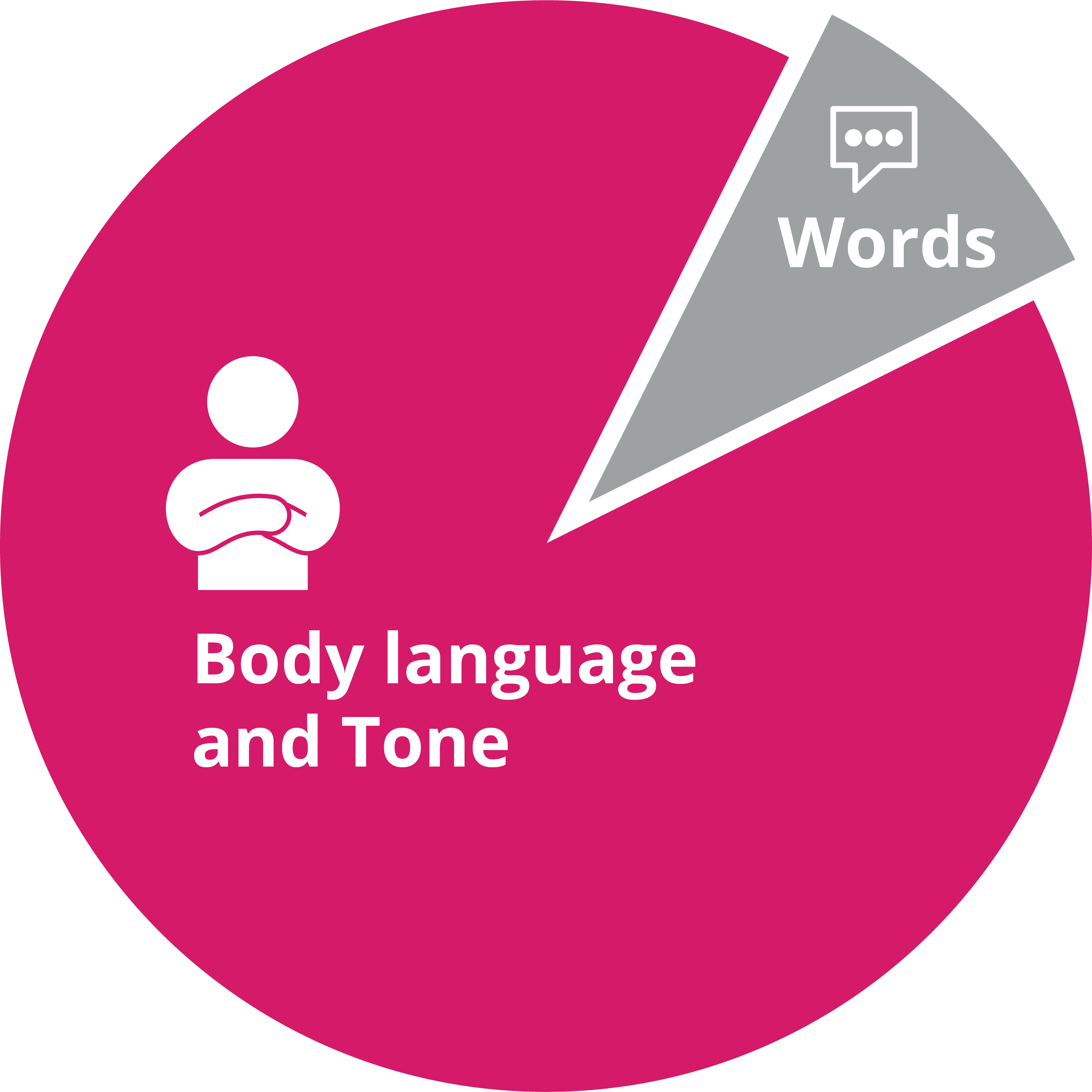
When we react to a situation, most of our expressions come from non-verbal cues – body language, tone, and other silent displays. In fact, as little as 10% of meaning comes from our words.
If we are in the box, even though we may try and convey with our words otherwise, the physical signals we give show our in the box state.
Other people almost invariably pick up our in the box state from nonverbal cues. As a result, leading from an in the box state almost never has the impact we intend.
Behavior example: an employee was frustrated after his colleague arrived late to work for the second time in a week. Clearly annoyed, he reacted, ‘late, again!’ This verbal reaction caused the colleague to walk away, equally frustrated, and nothing was resolved. Instead of asking why (it turned out that there were some unfortunate family circumstances behind the lateness) and offering support, the employee automatically assumed that the colleague was wrong and disrespectful; therefore, his belief drove his behavior.
So What?
In the box, we lose our edge and creativity. We become less agile and our options seem limited. Our ability to inspire those around us diminishes and we could even become triggers for other people.
Awareness is key. The secret of being an inspirational leader is not to ignore or pretend like the box doesn’t exist, but to instead quickly notice when you go in the box, identify the self-talk that got you there, and learn how to quickly get out of the box.